مخطط الموضوع

    • Contact Information

      Email: noureddine.halla@univ-saida.dz / noureddine.halla@univ-saida.dz

      Dr. Halla Noureddine

      Course Title: Enzyme Engineering

      Target Audience: 3rd Year Biochemistry

      Credits: 4

      Coefficient: 3

      Evaluation Method: 40/60

    • Objectives of the Enzyme Engineering Course:

      • Understand the basics of enzyme engineering: Introduce students to the fundamental concepts of enzymes, including their structure, mechanism of action, and factors influencing their enzymatic activity.

      • Determine the optimal conditions for catalysis: Enable students to identify and analyze the optimal conditions for enzymatic catalysis, such as temperature, pH, and substrate concentration.

      • Measure enzymatic activity: Train students in techniques for measuring enzymatic activity and interpreting the results using appropriate methods.

      • Design enzyme bioproduction processes: Teach students how to design and develop industrial processes for enzyme production from microorganisms or plant/animal cells.

      • Applications of enzymes in industry: Explain to students the use of enzymes as catalysts in various industries, such as the food, pharmaceutical, and chemical industries.

      • Optimization and genetic modification of enzymes: Teach methods for modifying and improving enzymes through genetic engineering techniques to enhance their efficiency and performance in industrial applications.

      • Address challenges in industrial applications: Help students understand and solve potential problems related to the use of enzymes in industrial processes, such as thermal stability and resistance to inhibitors.


    • مفتوح: الخميس، 5 ديسمبر 2024، 9:28 PM
  • Part I: General Overview of Enzymes (Introduction).

    • Part I: General Overview of Enzymes (Introduction)

      Introduction to Enzyme Engineering
      Microorganisms were widely used by ancient peoples. The production of cheeses, breads, alcoholic beverages, and many other applications relied on microorganisms found in ancient texts from Babylon, Greece, Egypt, China, and India.
      Enzymes were the key components of microorganisms used for food production and other applications. However, ancient practices were based on repeated observations and experiments rather than scientific and technological methods. Since the early 19th century, scientists have studied enzymes more systematically. Throughout history, four technological advancements have had a significant impact on the use of enzymes as alternative catalysts for bioconversions, namely: enzyme isolation, enzyme immobilization, enzymes in non-conventional media, and recombinant DNA technology.
      In enzyme technology, many products such as food, fine chemicals, and pharmaceuticals have been produced using enzymes as biocatalysts. Additionally, enzymes are used for analytical and diagnostic purposes. They are also employed in many fields, including environmental remediation. Today, enzymes are used for various applications, ranging from pharmaceuticals to diagnostics.
      Biotechnological processes use one or more enzymes as biocatalysts, depending on the process state required. Compared to fermentation processes, enzymatic catalysis with isolated or immobilized enzymes has the following advantages:
      (1) The formation of by-products is minimized by other enzymes in the cells;
      (2) No need for complex nutrient media (e.g., carbon, nitrogen, and other essential nutrients for cell growth);
      (3) Smaller reactors can be used since higher productivity can be achieved compared to living cells.
      Chemical catalysis is typically performed at much higher temperatures and pressures. However, enzymatic catalysis for chemical synthesis also raises several issues, including the difficulty of isolating enzymes. Enzymes are inhibited by relatively low concentrations of end products, high temperatures, extreme pH conditions, certain metal ions, and solvents. Moreover, some enzymes remain very costly for industrial use and may require expensive cofactors for catalysis. Enzymatic catalysis tends to be too specific for general applicability.

      Part I: General Overview of Enzymes (1)

      1. Definition
      Enzymes are biological catalysts that accelerate chemical reactions within living cells. They are produced by living organisms and are generally present in very small quantities in various cells. They can also exhibit their activity when extracted from their source. Enzymes are all organic compounds, and several of them have been obtained in crystalline form.

      2. General Properties
      The general properties of enzymes are as follows:
      • All enzymes are proteins.
      • Enzymes accelerate reaction rates by:

      ·         Not altering the equilibrium of the reaction.

      ·         Being required in very small amounts.

      ·         Not being consumed in the overall reaction.
      • Enzymes possess the remarkable power of catalysis.
      • Enzymes are highly specific for their substrate.
      • Enzymes have active sites where interaction with the substrate occurs.
      • Enzyme catalysis involves the transformation of the enzyme-substrate complex as an important intermediate in their action.
      • Enzymes lower activation energy.
      • Some enzymes have regulatory functions.

      3. Structural Properties
      Some enzymes are purely protein in nature, and their activity depends solely on their structure, while others require one or more non-protein components for their function. These components are called coenzymes, cofactors, or prosthetic groups. If such a compound is firmly attached to an enzyme protein, it is called a prosthetic group. If its attachment to the protein is non-covalent, it is called a coenzyme. Some coenzymes exist in a free state in solution or are only bound to the protein during the reaction.
      The term apoenzyme refers to the protein part of the enzyme. The apoenzyme, when associated with its prosthetic group (or coenzyme), forms a complete enzyme system or holoenzyme.
      Holoenzyme = Apoenzyme + Coenzyme = Protein part + Non-protein part

      3.1. Coenzymes
      To exert their catalytic activity, many enzymes require the presence of small, non-protein molecules. Coenzymes are low-molecular-weight, organic, non-protein compounds that are heat-stable and can be separated by dialysis. The characteristics of coenzymes are:

      ·         They are heat-stable.

      ·         They are generally derived from vitamins.

      ·         They function as cosubstrates.

      ·         They participate in:

      o    Hydride and electron transfer reactions, e.g., NAD+, NADH, FMN, FAD, etc.

      o    Group transfer reactions, e.g., CoA, TPP, pyridoxal phosphate, tetrahydrofolic acid, etc.
      Most coenzymes belong to the B-vitamin family (water-soluble). Coenzymes act as intermediate carriers of specific functional groups of atoms or electrons transferred during enzymatic reactions.

      3.2. Apoenzyme
      3.2.1. Amino Acids and Peptides
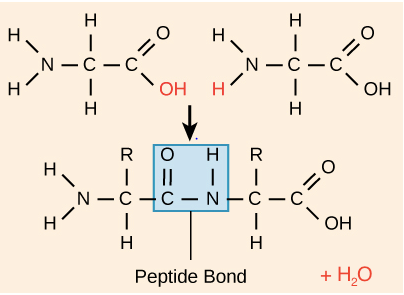
      Twenty α-amino acids are the monomers from which proteins are biosynthesized. These amino acids contain at least two different chemical groups capable of reacting with each other to form a covalent bond. These are the amino group (NH3+) and the protonated carboxylate group (COO–). The characteristic bond in the protein polymer is the peptide (amide) bond between the carboxyl group of one amino acid and the amino group of another after the elimination of water (figure 01).


      figure 01. Acides aminés et peptides

      3.2.2. Properties of Amino Acids
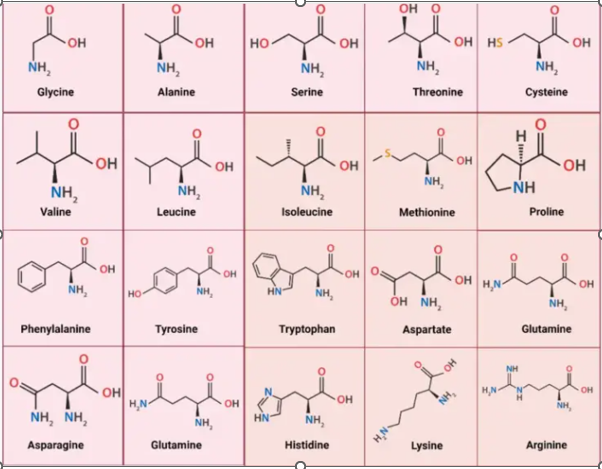
      Amino acids share a common dipolar ionic structure and a chiral center (figure 02). They differ from each other by the structures of their side chain groups. These groups vary in size and chemical structure. The side chain groups occupy a significant portion of the space inside a protein molecule and determine many of the chemical and physical properties of the molecule. The following figure shows the structures of the side chains of amino acids commonly found in proteins.

      Amino acids such as glycine, alanine, valine, leucine, isoleucine, phenylalanine, and methionine are sometimes grouped as non-polar. They tend to be found in a hydrophobic environment within a protein molecule. Amino acids such as aspartic acid, glutamic acid, histidine, lysine, and arginine contain charged, polar side chains. The other amino acids are classified as polar but uncharged.


      figure 02.Structure of 20 Amino acids with their chemical formula


      3.3.3 Proteins
      Amino acids can form amide bonds through condensation between the carboxyl group and the amino group. These amide bonds are specifically called peptide bonds. When two amino acids condense, the product is called a dipeptide. When another amino acid condenses with this dipeptide, a tripeptide is formed. In this way, a chain of amino acids can be linked together to form a polypeptide or a protein. Based on their physical characteristics, proteins can be classified into globular, fibrous, and membrane-bound classes.

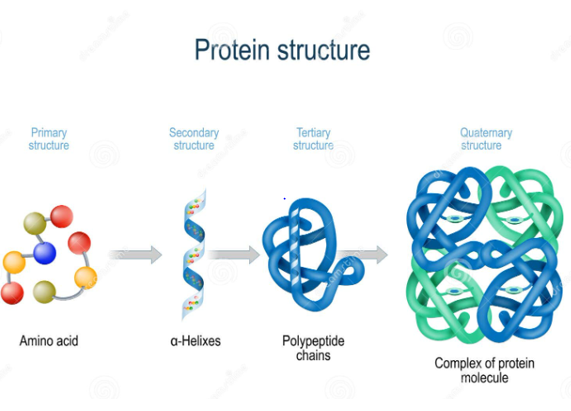
      There are four levels of protein structure, organized hierarchically from the primary structure to the quaternary structure (figure 03). The secondary structure of the protein refers to the local substructures. The alpha helix and the beta strand (or beta sheet) are the two main types of secondary structure. The tertiary structure is a three-dimensional folded structure due to the secondary structural elements and interactions between the side chains of the amino acids. An assembly of multiple polypeptide chains into a large protein molecule is called the quaternary structure.


      figure 03. protein structure, organized hierarchically from the primary structure to the quaternary structure


    • What is the percentage of your Understanding  of the lesson ?

    • مفتوح: السبت، 7 ديسمبر 2024، 5:24 PM
      مغلق: السبت، 7 ديسمبر 2024، 5:24 PM
    • Hello everyone

  • Part I: General Overview of Enzymes

    • 4. Enzyme Classification
      Around 5,000 enzymes have been characterized so far, with more than 300 enzymes available commercially and supplied by enzyme manufacturers. According to the reactions they catalyze, enzymes are grouped according to the nomenclature report of the International Union of Biochemistry (1984). Enzymes are named by adding the suffix "-ase" to the name of their substrate. However, some enzymes have names that do not refer to their substrates, such as pepsin and trypsin. To avoid ambiguity, the International Union of Biochemistry (IUB) has assigned each enzyme a name and a four-level number. The Enzyme Commission (EC) numbers divide enzymes into six main groups based on the reactions they catalyze.

      4.1. Oxidoreductases: These enzymes catalyze oxidation and reduction reactions. They are divided into three groups:

      • Oxidases: Enzymes that use oxygen as the hydrogen acceptor, for example, tyrosinase, uricase.
      • Anaerobic Dehydrogenases: Enzymes that use other substances as hydrogen acceptors, for example, lactate dehydrogenase, malate dehydrogenase.
      • Hydroperoxidases: Enzymes that use hydrogen peroxide as a substrate, for example, catalase, peroxidase.

      4.2. Transferases: These enzymes catalyze the transfer of a group from one molecule to another. They are important in biological synthesis, such as transaminases, hexokinases, transacylase, transaldolase, ketolase, and phosphomutases.

      4.3. Hydrolases: These enzymes catalyze the hydrolysis of a substrate by adding a water molecule to the bond being cleaved, for example, esterases, peptidases, phosphatases, deamidases.

      4.4. Lyases: These enzymes catalyze the addition or removal of groups from a substrate without hydrolysis, oxidation, or reduction, for example, decarboxylases, carboxylases, carbonic anhydrase, aldolase, enolase, etc.

      4.5. Isomerases: These enzymes catalyze the conversion of a compound into an isomer, for example, racemases, epimerases, isomerases.

      4.6. Ligases: These enzymes catalyze the binding of molecules coupled with the breakdown of the pyrophosphate bond in ATP, for example, glutamine synthetase, succinate thiokinases.

      5. Enzyme Specificity
      Enzyme specificity is determined by the fit of the reactant to the enzyme surface. Some enzymes are highly specific and exhibit activity with only one substrate. However, some enzymes are much less specific and will catalyze the reaction with similar compounds. Some enzymes show specificity only for a specific group of a substrate. For example, urease catalyzes the hydrolysis of urea. A change in the structure of urea results in a loss of activity. Furthermore, some enzymes show specificity for the D and L forms of the same substrate. For example, D-amino acid oxidase acts only on the D-form of the amino acid and not on the L-form.
      Some enzymes catalyze similar types of reactions, but their actions differ due to the absolute specificity of the substrate. For example, pepsin hydrolyzes a peptide bond involving an amino group of aromatic amino acids such as phenylalanine or tyrosine. Similarly, trypsin hydrolyzes the peptide bond involving the carboxyl group of basic amino acids such as lysine or arginine.

      6. Enzyme Biosynthesis
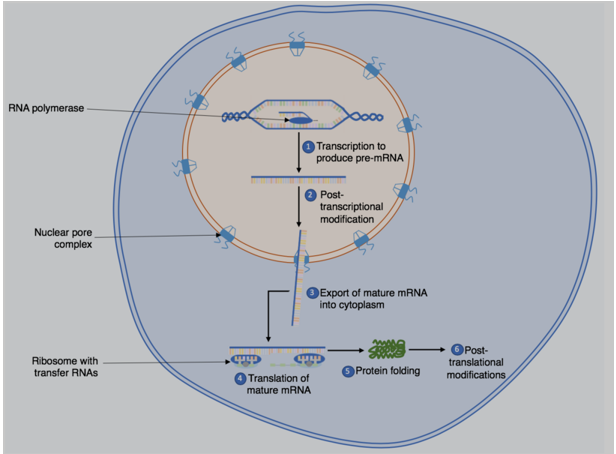
      The foundation of enzyme production can be attributed to genetic disruption. The biosynthesis of an enzyme depends on (a) the transcription of genetic information from DNA or RNA into messenger RNA (mRNA) and (b) the translation of mRNA into a polypeptide, based on the genetic codon information in the mRNA (Figure 04).

      Figure 04. Enzyme Biosynthesis

      7. Enzyme Kinetics
      In enzyme-catalyzed reactions, the concentrations of reactants and products are typically hundreds or thousands of times greater than the concentration of the enzyme. As a result, each enzyme molecule catalyzes the conversion of many reactant molecules into product. In biochemical reactions, the reactants are commonly called substrates. The catalytic event that converts the substrate into a product involves the formation of a transition state and occurs most easily at a specific binding site on the enzyme. This site on the enzyme is called the catalytic site, structured to provide a high-affinity binding of the substrate (S) and to create an environment conducive to catalytic events.
      The complex that forms when the substrate (S) and enzyme combine is called the enzyme-substrate (ES) complex. When the ES complex breaks down, the products and enzyme are released. Between the binding of the substrate to the enzyme and the reappearance of the free enzyme and product, a series of complex events must occur. These events are as follows: an ES complex is formed; the complex goes through a transition state (ES*), and the transition state complex moves to an enzyme-product (EP) complex, which eventually dissociates into product and free enzyme.
      The rate (v) of an enzyme-catalyzed reaction depends on both the enzyme concentration [E] and the substrate concentration [S]. The graph of reaction velocity versus substrate concentration for a typical enzyme-catalyzed reaction is typically hyperbolic.

      This graph is known as the saturation graph, meaning that when the enzyme becomes "saturated" with substrate (i.e., when each active site of the enzyme molecule is associated with a substrate molecule), the rate becomes independent of substrate concentration. The simplest model for an enzyme-catalyzed reaction is given by the following equation:

      Where k1 and k-1 are the rates of association and dissociation of the ES (enzyme-substrate) complex, and K2 is the catalytic constant.

      Typically, the rate of an enzyme is measured at the initial conditions of [S] and [P]. These reactions can also be described graphically.
      At low [S], the rate (V) increases with [S]. At high [S], enzymes become saturated with substrates, and the reaction is independent of [S]. The saturation graph above is a hyperbolic graph, and the equation for a hyperbola is the substitution of our equation parameters.
      The Michaelis-Menten constant (Km) is the substrate concentration [S] at which the reaction velocity (V) is half of its maximum value (1/2 Vmax). Km is a measure of the enzyme’s affinity, meaning that the lower the Km, the less substrate is needed to saturate the enzyme. It is difficult to estimate Vmax and Km from a typical hyperbolic graph of [substrate] versus velocity. These two parameters are used to describe enzyme efficiency, but there must be an easier method for estimating these parameters.
      The Michaelis-Menten equation is a quantitative description of the relationship between the reaction velocity of an enzyme-catalyzed reaction [v], the substrate concentration [S], and two constants, Vmax and Km (which are defined by the particular equation). The symbols used in the Michaelis-Menten equation refer to the reaction velocity [v], the maximum reaction velocity (Vmax), the substrate concentration [S], and the Michaelis-Menten constant (Km). This equation shows that the substrate concentration that produces exactly half of the maximum reaction velocity (1/2 Vmax) is numerically equal to Km. This fact provides a simple yet powerful bioanalytical tool that has been used to characterize both normal and altered enzymes, such as those producing symptoms of genetic diseases.

    • What is the percentage of your Understanding  of the lesson ?

    • Hello everyone

    • مفتوح: السبت، 7 ديسمبر 2024، 5:36 PM
      مغلق: الأحد، 8 ديسمبر 2024، 5:36 PM
  • Part II: Enzyme Production

      1. Enzyme Sources
        The first step in enzyme production is selecting the enzyme source. Enzymes can be derived from microorganisms through fermentation processes, as well as from plant and animal sources. The table below presents industrially important enzymes and their sources.

      Table 01: Industrially Important Enzymes and Their Sources

      Origin Enzyme Source Application
      Microbial Proteases Bacillus amyloliquefaciens, B. subtilis, Aspergillus oryzae, Streptomyces spp. Protein hydrolysis
        Amylase Bacillus genus, Aspergillus oryzae Starch hydrolysis
        Glucose isomerase Bacillus genus, Streptomyces spp. Isomerization of glucose to fructose
        Penicillin acylase E. coli, Bacillus genus, Streptomyces spp. Production of semi-synthetic penicillins
        Pectinases Aspergillus niger Enzymatic hydrolysis of pectin
        Lipase Candida antarctica Triglyceride hydrolysis
      Plant Papain Carica papaya Meat tenderizing
        Actinidin Kiwi Meat tenderizing
        Lipoxygenase Soybean Bread and flavor production
      Animal Chymosin (Rennet) Calf stomach Cheese production
        Acetylcholinesterase Bovine erythrocytes Analysis of organophosphates (e.g., pesticides)
        Cholesterol esterase Porcine pancreas Detecting serum cholesterol levels

      Microorganisms are attractive enzyme sources as they can be cultured on a large scale. Enzymes derived from microorganisms often have better properties, such as high stability, compared to those from plant or animal sources. Identifying suitable microorganisms for enzyme production starts with screening a wide range of organisms, typically those recognized as safe. Additionally, microorganism screening based on their growth conditions may also be an option.

      Plants are generally not considered major sources of industrial enzymes because they are seasonal and intracellular, which requires extra processes to break the cell walls. However, despite these limitations, some plant-derived enzymes have been used in the industry. Animal tissues and secretions are also potential enzyme sources. Chymosin, for example, is an important enzyme from animals, used in cheese production and as a digestive aid.

      1. Enzyme Screening
        Enzymes are crucial because their catalytic power facilitates life processes. However, several factors must be considered, such as substrate specificity, activity, selectivity, stability, and recyclability, to determine an enzyme's usefulness for biocatalysis. Enzyme activity, one of the most important properties, is influenced by their structure and environment. A recent and effective strategy for discovering new enzymes is to search for microorganisms exhibiting characteristic diversity. Another strategy involves the metagenomic approach, a culture-independent method that uses microbial genomic data.

      The following factors are considered when researching enzyme production in microorganisms: the microorganism should grow on inexpensive and readily available nutrients, the enzyme should be produced with a high yield in a relatively short time, and the microorganism should be non-pathogenic.

      1. Enzyme Production

      3.1 Fermentation Process
      Fermentation processes for microbial enzyme production can be carried out by solid-state culture or submerged culture of microorganisms. Most enzyme manufacturers produce enzymes using submerged fermentation techniques. Submerged fermentation is defined as fermentation in the presence of excess water. This technique allows for better control of process parameters, such as temperature, pH, aeration, and dispersion, for effective growth. Another advantage is ease of handling.

      Various factors influence a microorganism's metabolism and the enzymes produced. The medium in which the microorganism is cultured, for example, can affect microbial growth and enzyme production. Culture conditions must be optimized for maximum microbial strain production, resulting in optimal enzyme production. Each microbial species grows at different rates with specificity for different substrates in the culture medium. These growth conditions can influence enzyme activities.

      3.2 Plant Cell Culture
      Plant cell culture is also being explored as a tool for producing therapeutic proteins and as an important source of compounds used as flavors, colors, and fragrances in the food industry.

      3.3 Animal Cell Culture
      Animal cells are relied upon to synthesize complex mammalian proteins that cannot be produced by genetically modified microorganisms. For example, monoclonal antibodies are produced by culturing mammalian cells.

      Monoclonal antibody technology uses immune system cells to make proteins called antibodies. These antibodies exhibit extraordinary specificity. The process for making monoclonal antibodies involves fusing a human myeloma cell (a cancerous immune B cell) that can no longer secrete antibodies with a normal mouse B cell, which has been immunized to secrete a specific antibody. The myeloma component helps the hybrid cell multiply indefinitely, and the fused cell, called a hybridoma, can be cultured. These cells produce identical antibodies, hence the term "monoclonal antibodies."

      1. Cofactor Regeneration
        Enzymes like oxidoreductases and transferases are capable of catalyzing industrially useful reactions. However, these enzymes often depend on a cofactor. Cofactors are relatively low-molecular-weight compounds necessary for enzymatic reactions.

      Methods of regenerating nicotinamide cofactors include enzymatic, photochemical, or electrochemical methods. Enzymatic methods can be done either by using an enzyme that utilizes the reduced and oxidized forms of a cofactor through coupling the desired product synthesis with the cofactor regeneration reaction or by using two enzymes, one acting on the product synthesis and the other on cofactor regeneration.

      4.1 Cofactor Regeneration Methods

      4.1.1 Enzymatic Method
      a. Regeneration of Reduced Nicotinamide Cofactors: Several enzymes are known to catalyze the regeneration of reduced nicotinamide cofactors.

      • Formate dehydrogenase: Oxidizes formate to carbon dioxide while simultaneously reducing NAD to NADH. The carbon dioxide formed as a by-product is chemically inert and can be released into the environment.
      • Glucose dehydrogenases: Used for the regeneration of NADH.
      • Alcohol dehydrogenase: Can catalyze reactions that allow for the production of chiral compounds or regeneration of the coenzyme due to the reversibility of this reaction.

      b. Regeneration of Oxidized Nicotinamide Cofactors: Several enzymatic methods have been developed to regenerate oxidized nicotinamide cofactors.

      • Glutamate dehydrogenase: Used for NADP+ regeneration.
      • L-lactate dehydrogenase: Can oxidize NADH to NAD while reducing pyruvate to lactate. This enzyme is highly specific for pyruvate and short-chain 2-keto acids as substrates.

      4.1.2 Electrochemical Method
      An electrochemical method using enzymes and an electrode is also being explored for cofactor regeneration. This method is simple and cost-effective, although an electrochemical device is required. The desired product can be easily recovered since no co-substrates or by-products are produced. The electrochemical cofactor regeneration method can be divided into two concepts: (a) direct regeneration and (b) cofactor-mediated regeneration.

      4.1.3 Photochemical Method
      Photochemical methods have been studied to solve the issues of direct electrochemical oxidation of NAD(P)H. Photosensitizers that absorb visible light to convert energy into electron transfer processes, such as organometallic complexes, organic dye compounds, and semiconductor materials in powder or colloidal form, are used to mediate electron transfer reactions.

  • Part III: Enzyme Extraction, Isolation, and Purification

    • Before enzymes can be used in industrial applications, they must be extracted from their biological sources. Each extraction or purification step increases production costs, thereby reducing the enzyme yield. Specific enzyme activity can be enhanced through additional purification steps, but these also require extra costs.

      From the biological source, the protein content of the enzyme must be high to facilitate the extraction process. Another important factor is maintaining enzyme activity. The maximum activity must be preserved during enzyme preparation. Factors such as heat, proteolysis, pH changes, oxidation, and loss of cofactors can reduce enzymatic activity.

      Extracellular enzymes are sometimes used without isolation or purification. On the other hand, intracellular enzymes require cell disruption to release the enzymes from the cells into the solution before purification. Isolating intracellular enzymes often involves separating complex biological mixtures. Extracellular enzymes are typically released into the medium with only a few other components. Native conformation is achieved under specific pH, temperature, and ionic strength conditions.

      Solid-liquid separation is necessary to remove cellular debris after cell disruption. Intracellular enzymes may contain nucleic acids, which can interfere with purification procedures by increasing viscosity. Nucleic acids must be removed by adding nucleases or through precipitation.

      1. Biological Material Preparation

      Animal organs should be transported and stored at low temperatures to maintain enzymatic activity. The organs need to be cleaned of fat and connective tissue before freezing. Frozen organs can be chopped using machines typically used in the meat industry, and enzymes can be extracted with a buffer solution. In addition to mechanical grinding, enzymatic digestion can also be used. Fat attached to organs interferes with subsequent purification steps and can be removed with organic solvents.

      Plant material can be ground with various grinders, and the desired enzymes can be extracted with buffer solutions. Cells can also be disrupted through pretreatment with lytic enzymes. Microorganisms are an important source of enzymes. Genes can be transferred into microorganisms to enable them to produce proteins they do not naturally produce. Alternatively, modifying a microorganism's genome can alter the properties of proteins, making them easier to isolate and purify.

      1.1. Cell Disruption by Mechanical Methods

      High-pressure homogenization is the most common method of cell disruption. Wet grinding of cells in a high-speed ball mill is another effective method. Ultrasonics are generally used in laboratories. Other methods include high-pressure nitrogen, French press, and freeze-thaw cycles.

      1.2. Cell Disruption by Chemical Methods

      Cells can often be disrupted by chemical lysis. Osmotic shock and modification of ionic forces through chemical agents are standard procedures in which the cell wall structure is altered to allow the subsequent extraction of cellular contents.

      1.3. Cell Disruption by Enzymatic Methods

      Enzyme-based methods (e.g., lysozymes) or autolysis have been described in the literature as techniques for cell disruption.

      2. Solid Matter Separation

      After cell disruption, the next step is the separation of extracellular or intracellular enzymes from the cells or cell fragments, respectively. This operation is challenging due to the small size of bacterial cells and the slight difference in density between the cells and the fermentation medium.

      2.1 Filtration

      Continuous filtration is used in the industry. Large cells, such as yeast cells, can be removed by sedimentation. The filtration rate depends on filter surface area, pressure, viscosity, and the resistance of the filter cake and medium. Vacuum filtration is typically the method of choice as biological materials are easily compressible. The future of this method depends on the development of suitable membranes.

      2.2 Centrifugation

      Effective centrifuges have been developed to separate cells and cell fragments in a continuous process. Plant and organ residues can be separated using centrifuges or simpler filters.

      2.3 Extraction

      An elegant method for isolating intracellular enzymes is liquid-liquid extraction in a two-phase aqueous system. The first extraction step separates the cell fragments.

      2.4 Flocculation and Floatation

      Flocculation is the process by which destabilized particles aggregate, come into contact, and form larger aggregates. Flocculating agents are additives that increase the degree of flocculation in a suspension.

      3. Concentration

      The enzyme concentration in the starting material is often very low. The volume of material to be processed is generally large, and significant amounts of waste must be eliminated. Therefore, to achieve economical purification, the starting material volume must be reduced by concentration. Only mild concentration procedures that do not inactivate the enzymes can be used. These include thermal methods, precipitation, and increasingly, membrane filtration.

      3.1 Thermal Methods

      Only brief thermal treatments can be used for concentration, as enzymes are thermolabile. Rotary evaporators can be employed for this purpose.

      3.2 Precipitation

      Enzymes are complex protein molecules with ionizable and hydrophobic groups that interact with the solvent. Proteins can be aggregated and eventually precipitated by modifying their environment. Precipitation is a simple procedure for concentrating enzymes. High salt concentrations affect the water molecules surrounding the protein and modify the electrostatic forces responsible for solubility. Ammonium sulfate is commonly used for precipitation, making it an effective agent for enzyme concentration.

      Organic solvents affect enzyme solubility by reducing the dielectric constant of the medium. This modifies the solvation effect of the water molecules surrounding the enzyme, increases protein-protein interactions, and leads to aggregation and precipitation. Polymers such as polyethyleneimines and poly(ethylene glycols) of different molecular weights are also used to concentrate enzymes.

      Protein solubility is strongly influenced by pH and is minimal at the isoelectric point, where the net charge is zero. Since most proteins have isoelectric points in the acidic range, this process is also referred to as acid precipitation.

      3.3 Ultrafiltration

      A semi-permeable membrane allows the separation of solvent molecules from larger enzyme molecules, as only smaller molecules can pass through the membrane when osmotic pressure is exceeded. This principle is used in all membrane separation processes, including ultrafiltration. Membranes for ultrafiltration are available and exclude molecules between 1000 and 300,000 Daltons.

      4. Purification

      For many industrial applications, partially purified enzyme preparations will suffice; however, enzymes for analytical and medical use must be highly purified. Special procedures for enzyme purification include crystallization, electrophoresis, and chromatography.

      4.1 Crystallization

      Enzyme crystallization is the formation of solid enzyme particles with defined shape and size. An enzyme can be crystallized or form protein-protein interactions by creating solvent conditions that lead to enzyme supersaturation. Enzymes that have been crystallized for commercial production include cellulase, glucose isomerase, subtilisin, and alcohol oxidase.

      4.2 Electrophoresis

      Electrophoresis is used to isolate pure enzymes at the laboratory scale. Depending on the conditions, the following procedures may be used: zone electrophoresis, isotachophoresis, or porosity gradients. Heat generated during electrophoresis and convection interferences are problems when scaling up this method. An interesting development in industrial electrophoresis is a continuous process where the electric field is stabilized by rotation.

      4.3 Chromatography

      Chromatography is fundamental to enzyme purification. Molecules are separated based on their physical properties (size, shape, charge, hydrophobic interactions), chemical properties (covalent binding), or biological properties (biospecific affinity).



  • Part IV: Enzyme Immobilization

    • One of the main challenges in using enzymes for industrial processes is their cost. Since enzymes are catalysts, they are not consumed during reactions. However, if enzymes are used in their free form, they must be recovered after the reaction to be reused. Residual enzymes can also contaminate the product unless properly separated during the purification stages.

      Key advantages of enzyme immobilization include (1) easier separation of the product from the reaction medium and (2) the possibility of enzyme reuse. The ease of separating the enzyme from the product flow allows industrial applications of the enzyme to be more efficient. Product contamination from the enzymatic reaction can be avoided by using immobilized enzymes, which also help reduce downstream processing costs. Reusing enzymes offers cost benefits and is often a critical factor in making commercially viable enzyme-catalyzed processes.

      1. Methods of Enzyme Immobilization
      There are several methods for enzyme immobilization: physical methods and chemical methods. Physical methods include adsorption and entrapment, while chemical methods involve cross-linking and covalent bonding (figure 07). Regardless of the immobilization method used, the materials for enzyme immobilization must be insoluble in the reaction medium. The immobilization process should provide good physical properties relevant to industrial applications, although the support material is necessary to facilitate the diffusion of the substrate and product.

      1.1 Adsorption: This method involves the attachment of enzymes to materials such as DEAE-cellulose or activated carbon using weak forces like Van der Waals forces, hydrophobic interactions, or dispersion forces. Adsorption is inexpensive, does not require chemical reactions, and preserves high activity. However, because the forces of adsorption are typically weak, enzymes may be easily washed off, leading to product contamination.

      1.2 Entrapment: Enzymes are captured in cavities within a matrix or a polymer microcapsule. Synthetic polymers like polyacrylamide and polyvinyl alcohol, as well as natural polymers like Ca-alginate and carrageenan, can be used. Recently, sol-gel polymerization has been employed, enabling the use of inorganic materials as well. This method reduces the risk of enzyme leaching and improves enzyme stability, but it can limit the mass transfer of substrate and product.

      1.3 Cross-Linking: This method involves forming a three-dimensional network of enzymes by coupling reactive agents. Cross-linking enhances the stability of enzymes due to strong interactions between the enzymes and the support. However, the cross-linking reagents and conditions used can sometimes damage the enzyme.

      1.4 Covalent Bonding: Covalent attachment of the enzyme to a matrix is widely used and offers the advantage of strong interactions between the enzyme and the support, making the enzyme highly stable. The amino group (–NH2) in lysine or arginine, the carboxyl group (–COOH) in aspartic or glutamic acid, the hydroxyl group (–OH) in serine or threonine, and the thiol group (–SH) in cysteine can all participate in the bonding process with cross-linking reagents.

      2. Characteristics of Enzyme Immobilization
      Immobilizing enzymes affects their microenvironment, which leads to various changes in characteristics such as optimal pH, selectivity, and stability.

      2.1 Enzyme Activity: Immobilized enzymes may sometimes exhibit higher activity than their free counterparts. This enhancement in activity depends on several factors such as the microenvironment, conformational changes in the enzymes, orientation in the support matrix, and diffusion effects on substrates and products.

      2.2 Thermal Stability: The stability of immobilized enzymes depends on the immobilization conditions, the amount and strength of interactions with the support, the bonding position, the flexibility of the enzyme, the structure of the support, and the microenvironment.

      2.3 Solvent Stability: Organic solvents are generally harmful to enzymes. When enzymes aggregate in organic solvents, the substrate becomes inaccessible. However, immobilizing enzymes in mesoporous materials can enhance their activity in organic solvents if properly designed and selected.

      2.4 Selectivity: Enzyme-catalyzed asymmetric synthesis is in high demand due to the growing need for optically pure intermediates in pharmaceutical applications. Immobilization can affect the enzyme's structure, especially at the active site, altering substrate selectivity. However, the theoretical and structural understanding of how immobilization can enhance enzyme selectivity is still under development and requires further research.

      3. Reactor Systems and Technical Considerations
      Once enzymes are immobilized, the appropriate reactor type must be chosen for industrial reactions. When selecting a reactor system for a specific process, several factors are considered, such as cost, reaction kinetics, chemical and physical properties of the immobilization support, pH and temperature control methods, the need to supply and remove gaseous components (if applicable), and enzyme stability (figure 08).

      3.1 Batch Reactors: These reactors consist of a tank with an agitator and deflectors inside to improve agitation efficiency, along with a heat exchanger if necessary. Both the enzyme and substrate have the same residence time in the reactor, and the product is removed as quickly as possible after the reaction time is completed.

      3.2 Continuous Flow Reactors: Continuous flow reactors also offer numerous advantages when using immobilized enzymes. Compared to batch processes, a higher productivity from the same amount of enzyme can be achieved because immobilized catalysts have a longer residence time than the substrate in the reactor. These reactors provide constant reaction conditions, which helps achieve more consistent and reproducible product quality and quantity. Examples of continuous flow reactors include stirred-tank reactors, packed-bed reactors, and fluidized-bed reactors

  • Part V: Applications of Enzymes

    • Enzymes are increasingly used in various industrial sectors due to their specificity and ability to catalyze chemical reactions efficiently and ecologically. Enzyme applications span multiple fields, from chemicals to food industries, textiles, and bioenergy.

      1. Enzymes for Chemicals and Polymers

      Enzymes play a growing role in the synthesis of chemicals and polymers, often used in the production of pharmaceuticals, food products, and biological polymers.

      1.1. Semi-synthetic Penicillins and Cephalosporins

      Penicillin, one of the first antibiotics discovered in nature, is still widely produced. Penicillin G and V, first-generation antibiotics, are used to produce β-lactam intermediates such as 6-aminopenicillanic acid (6-APA) and 7-amino-desacetoxycephalosporanic acid (7-ADCA), which are crucial in the production of second-generation antibiotics.

      1.2. Acrylamide from Acrylonitrile

      The production of acrylamide from acrylonitrile is facilitated by nitrilases, which catalyze the hydration of the nitrile group to produce carboxylic acid. This enzymatic process is a successful example of using enzymes in bulk chemical production.

      1.3. Polymers

      Enzymes are involved in the biosynthesis and modification of biomaterials like polyhydroxyalkanoates, cellulose, and lignin. They also catalyze the formation of phenolic polymers and aliphatic polyesters, which are used in various biomedical and ecological applications.

      2. Enzymes for the Food Industry

      Enzymes are crucial in the food industry, where they are used to alter texture, flavor, and shelf-life of products. They are found in both natural and processed foods, such as dairy products and baked goods.

      2.1. Dairy Products

      In cheese-making, rennet, which contains proteases, is used to coagulate milk. Enzymes such as proteinases, lipases, and transglutaminases are also used to speed up cheese maturation and improve its characteristics. Enzymes also help reduce syneresis in acidified milk gels, like yogurt.

      2.2. Bread Production

      Enzymes like amylase, protease, and xylanase play a key role in improving dough quality and the final product. They help break down starch, improving texture and shelf-life of bakery products.

      3. Applications in the Textile Industry

      Enzymes are becoming increasingly popular in textile treatment as they can replace harmful organic/inorganic agents, reducing pollution. Examples include cellulases and amylases used for better dye absorption, and enzymes like laccases and lignin peroxidases used for bleaching and improving fabric whiteness before dyeing.

      4. Enzymes for Bioenergy

      Enzymes are essential in the production of bioethanol from carbohydrate-containing materials. They help hydrolyze starch, sucrose, and lignocellulosic materials, facilitating the production of biofuels.

      5. Enzymes for Biocensors

      Biocensors are devices that incorporate a living organism or a product derived from living systems (e.g., an enzyme or antibody) and a transducer to provide a signal or recognition of a specific substance in the environment. Biocensors are important in environmental and industrial monitoring, medicine, agriculture, food, safety, and bioremediation. Enzymes in biocensors offer high sensitivity, specificity, portability, cost-efficiency, and the potential for miniaturization and mass production. For example, glucose biosensors, which use glucose oxidase, are widely used in hospitals and industries.

      6. Applications in the Paper Industry

      In the pulp and paper industry, enzymes help save energy, replace harmful chemicals, and solve problems like deinking, pitch deposition, and biofilm formation. They are used in water treatment, deinking, and improving pulp quality.

      7. Enzymes in the Detergent Industry

      Proteases, amylases, lipases, and cellulases are used in detergents to break down stains from proteins, carbohydrates, and lipids. Using enzymes in detergent formulations allows for energy savings by enabling washing at lower temperatures, while maintaining efficiency similar to higher temperatures.

      Thus, the industrial applications of enzymes highlight their versatility and capacity to enhance efficiency, reduce environmental impact, and offer sustainable solutions across a range of sectors.