-
7) Classroom Management
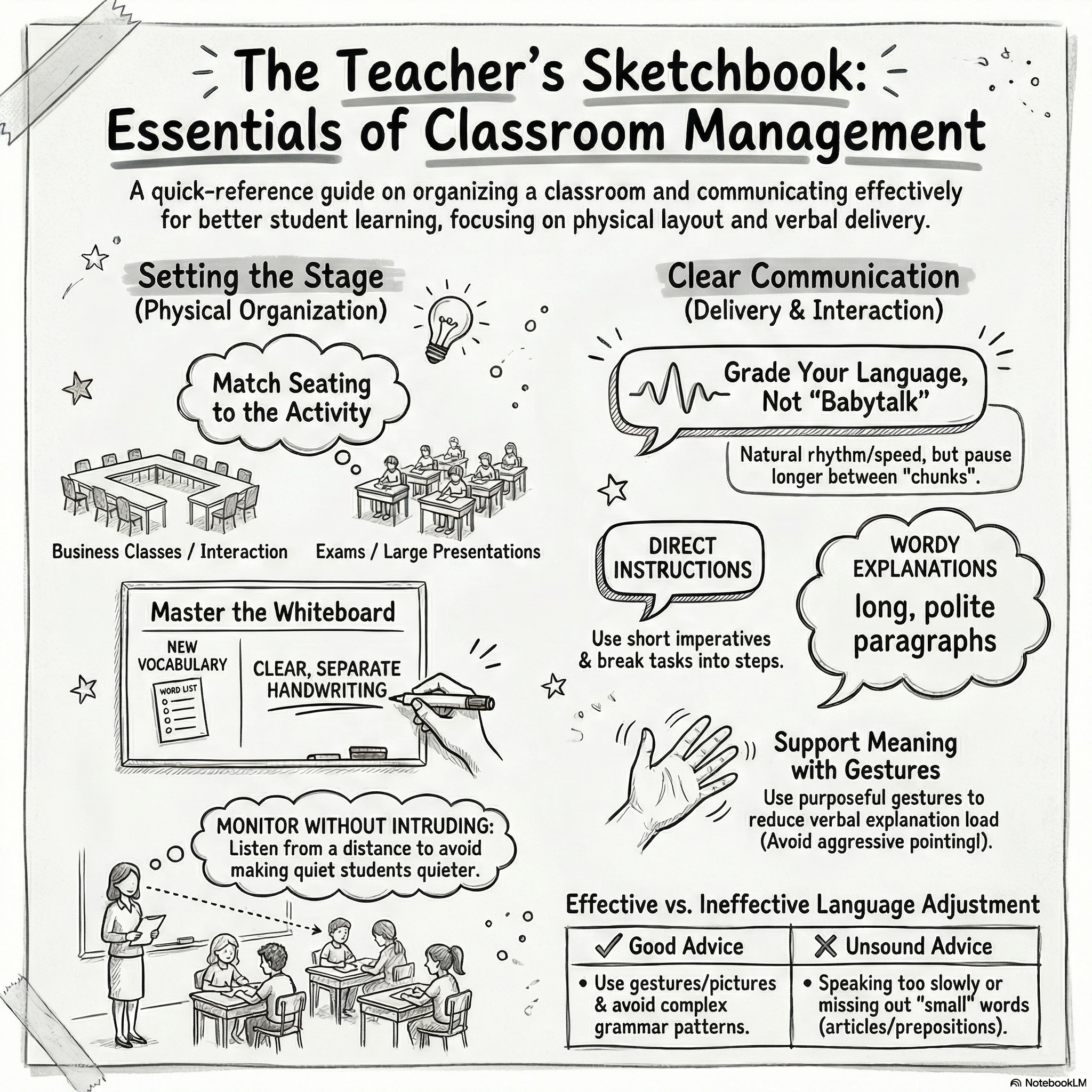
This lesson explores the core principles of classroom management by examining how various seating arrangements and interaction patterns like pairwork can be used to facilitate learning. It provides practical strategies for the effective use of the whiteboard and emphasizes grading teacher language to ensure it remains intelligible for different learner levels. A significant focus is placed on delivering clear instructions by breaking tasks down into manageable steps and using checking questions to verify student understanding. Finally, the lesson uses reflective practice to help teachers address common classroom challenges, such as monitoring activities, managing early finishers, and supporting quiet students.

At the end of Lecture 7, students will be able to:
- Explain the rationale for using different seating arrangements and identify which layouts are most suitable for specific scenarios.
- Analyze the advantages and disadvantages of pairwork and groupwork.
- Apply principles of effective boardwork, such as planning designated spaces for different purposes.
- Formulate clear and effective instructions by breaking tasks into manageable chunks, using direct language, and employing simple checking questions to verify student comprehension.
- Evaluate and resolve practical classroom challenges through reflective practice, including managing quiet students, providing tasks for early finishers, and effectively monitoring learners without interrupting the flow of an activity.
- Utilize non-verbal communication tools, such as gestures and demonstrations, to support meaning and reduce the verbal processing burden placed on learners, particularly at lower levels.
-
Lecture 7
-
Watch this video
-