-
📘 Chapter 1: General Introduction
📘 Chapter 1: Introduction – Polynomial Interpolation and Approximation
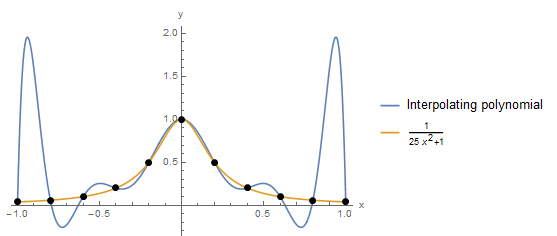
Imagine you are receiving a digital signal that has lost some of its data points due to noise or transmission errors. How can you reconstruct the missing information reliably? This is where polynomial interpolation and approximation come into play. By using these techniques, we can rebuild functions or signals from discrete data points, ensuring accuracy and minimizing distortion.
In this chapter, we will explore methods that are not only mathematically rigorous but also highly practical in real-world scenarios, especially in telecommunications and signal processing. You will see how these techniques are applied to:
- 🔹 Reconstruct digital signals from sampled data in noisy channels.
- 🔹 Compress and transmit data efficiently by approximating signals with polynomials.
- 🔹 Smooth experimental measurements from sensors in telecommunication devices.
- 🔹 Predict missing or corrupted data points in time-series or transmitted sequences.
Throughout this chapter, you will have opportunities to experiment with small datasets, visualize the interpolation results, and compare different polynomial methods. By the end, you will not only understand the theory but also be able to apply these tools to practical engineering problems in telecommunications and digital signal processing.